Catégorie : Anarcho-syndicalisme

Two black cats sitting in front of a big cercled-anarchist A

The Salish Sea Anarcha Network | Jeff Shantz (Canada, 2024)

There has been something of a revival of anarcho-syndicalist theory and practice in so-called Canada. The formation of the Salish Sea Anarcha Network (SSAN) has brought together syndicalists across unceded territories which make up the city of Vancouver. Here’s an overview of some early work and interviews with SSAN participants. They provide analysis of important contemporary issues like relationships with the land, centering Indigenous solidarity, and developing green syndicalist practice — all in a context where active anarcho-syndicalist organizing has largely been absent for a long time.


Mujeres Libres: Individuality and Community | Martha Ackelsberg (USA, 1984)

Mujeres Libres had little time to turn its vision into reality, so we cannot know how much they might have accomplished. Nor, so far as I can tell, did they have a clear formula for how to make it all work. But their own organization was a federation of autonomous local groups; and the relationship they wanted (but could not have) with the larger anarchist movement was also that of an autonomous set of units operating within the larger, federated, whole. Perhaps that model (and a sense of anarchist commitments to direct action and spontaneous organization) can provide us with some clues.

En Espagne | Ariane Miéville et José Luis García González (Octobre 2024)

Une marque déposée va interdire l’usage du sigle CNT et d’un certain nombre de symboles, dont le drapeau rouge et noir en diagonale, à la CNT-AIT. Ceux-ci seront désormais propriété exclusive de la CNT-CIT (ou CNT®). Une première fournée de 17 syndicats ont été condamnés à verser 2000€ chacun à titre de préjudice moral à la CNT®CIT. Le 29 octobre 2024 prochain, 17 autres entités (syndicats et fédérations locales de la CNT-AIT) seront à leur tour dénoncées pour les mêmes motifs par la CNT®CIT et risquent la même condamnation. Et il y aura peut-être une troisième fournée.

Espagne : problèmes de la Révolution | Ariane Miéville & José Luis García González (2024)

Durant la Guerre d’Espagne, des anarchistes acceptèrent d’être associé.es au pouvoir en devenant ministres… Comment ce processus d’intégration s’est-il produit ? Quelles en furent les conséquences ? Cet article propose un aperçu succinct et partiel. Il vise à ouvrir la discussion sur des problèmes qui – sous des formes différentes – restent actuels.

Anarcho-Syndicalism, Technology and Ecology | Graham Purchase (1995)

In an anarchist society, the absence of centralized state authority will permit a radically new integration of nature, labour and culture. As the social and ecological revolution progresses, national boundaries will become cartographical curiosities, and divisions based upon differences in geography, climate and species distribution will re-emerge. This essay addresses the question of what role unionism will play in these changes.

A few words about Workers Solidarity Alliance | Sachio Ko-yin, 2021

Workers Solidarity Alliance was founded in 1984, it is therefore US’ oldest continuous anarchist national organization. WSA enjoys Friends Status with the International Workers Association, IWA/AIT, which was founded in 1922, and is the world’s oldest continuous anarchist international. 

« Some of us were also members of IWW, and without doubt we loved IWW, but also craved a worker’s organization that saw the social revolution as the alternative to the State. »

Notes on the life of Eduardo Vivancos 1920-2020 | Reddebrek, 2021

Almost a century in the Libertarian and Esperanto movements

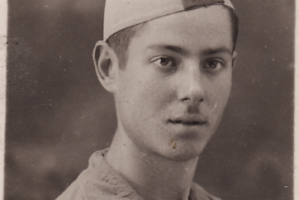
On the 30th December 2020 Eduardo Vivancos passed away at the age of 100. He leaves behind a family and nearly a century of dedication to a number of causes from athletics, Anarchosyndicalism, and minority languages especially Catalan and Esperanto. I think his life is worth remembering and while in the Spanish world his death was followed with numerous tributes and retrospectives, including a feature in Corredor a popular magazine dedicated to running, and a lot of friends mourned him in Esperanto texts, he’s largely unknown in English.

L’AIT dans le monde après la Deuxième Guerre mondiale | Rudolf Rocker (États-Unis, 1947)

La renaissance actuelle du mouvement libertaire dans le monde entier est la meilleure preuve que les grandes idées de liberté et de justice sociale sont encore vivantes après les terribles ravages de la guerre, qu’elles sont considérées par beaucoup comme des principes directeurs dans la résolution des divers problèmes qui se sont posés récemment ; elles sont également valables pour la voie vers un avenir meilleur et vers un plus haut degré d’humanité.