Author Archives

Avatar de Inconnu

liberteouvriere

Decolonization, Identity and Anarcho-Indianism | Gaya Makaran (Mexico, 2024)

Anarchism helps us to discover that behind certain decolonial approaches can hide a populist peripheral nationalism that reproduces what it supposedly criticizes, by not questioning the modern fetish categories such as the State, the nation or the race, constituting a kind of mirror of colonialism. […] The problem of ethnic-racial “diversity” lies in the hierarchization of difference perpetuated by the actual capitalist state system, and that the strategic mobilization of this difference without essentializing it, from an internationalism that unites the local with the global, can have a very powerful anti-colonial political meaning.

En Espagne | Ariane Miéville et José Luis García González (Octobre 2024)

Une marque déposée va interdire l’usage du sigle CNT et d’un certain nombre de symboles, dont le drapeau rouge et noir en diagonale, à la CNT-AIT. Ceux-ci seront désormais propriété exclusive de la CNT-CIT (ou CNT®). Une première fournée de 17 syndicats ont été condamnés à verser 2000€ chacun à titre de préjudice moral à la CNT®CIT. Le 29 octobre 2024 prochain, 17 autres entités (syndicats et fédérations locales de la CNT-AIT) seront à leur tour dénoncées pour les mêmes motifs par la CNT®CIT et risquent la même condamnation. Et il y aura peut-être une troisième fournée.

Une guerre en cache toujours une autre | Nedjib SIDI MOUSSA (Paris, 2024)

Critique libertaire du discours actuel tant de gauche que de droite à propos de l’immigration algérienne en France, de l’anti-impérialisme et du colonialisme.

« […] il s’est toujours trouvé des éléments, même isolés, qui, de part et d’autre de la Méditerranée – et bien au-delà –, ont refusé avec lucidité l’intégrisme, le nationalisme et le sexisme, pour faire vivre, au sens plein du terme, l’internationalisme, le pluralisme et la solidarité. Il nous revient donc de puiser dans ce que notre histoire a de meilleur pour imaginer avec optimisme des futurs désirables. »

The Anarchists, Zionism, and the Birth of the State of Israel | Sylvain Boulouque (1998)

Anarchists rarely adhere to a statist conception. From the inception of political Zionism, this national question arises among libertarians and provokes fierce debates. These controversies flare up with the course of events. At the birth of the State of Israel, anarchists took an official stance. They rejected the war in the Middle East and, apparently, the creation of a new state. However, the experience of the kibbutzim, which echoes the images of the agricultural collectives of revolutionary Spain, arouses strong sympathy.

Espagne : problèmes de la Révolution | Ariane Miéville & José Luis García González (2024)

Durant la Guerre d’Espagne, des anarchistes acceptèrent d’être associé.es au pouvoir en devenant ministres… Comment ce processus d’intégration s’est-il produit ? Quelles en furent les conséquences ? Cet article propose un aperçu succinct et partiel. Il vise à ouvrir la discussion sur des problèmes qui – sous des formes différentes – restent actuels.

Infrastructures of Resistance and Survival Toward Revolution: Reframing Reform v. Revolution Debates | Jeff Shantz (2024)

Working class infrastructures of resistance can take many forms—workers centers, free schools, cooperative food production, communal childcare, defense committees, collective housing, and more. They provide resources, venues, and logistics for supporting and sustaining struggles on a longer term basis. They also provide space for developing revolutionary consciousness, strategies, and tactics. Grounded in working class communities, relationships, and experiences. We need to focus on building the resources and infrastructures that get us through the current capitalist hellscape while also increasing our capacities to fight toward revolution.

Capitalists, Global Warming, & the Climate Justice Movement | James Herod (2009)

Can the climate justice movement stop global warming? No, it can not. To do that it would have to be able to destroy capitalism. This objective, however, is hardly even on the agenda for most climate activists, and if it were they wouldn’t have an inkling about a strategy for doing so. Hardly anyone does nowadays. If a movement can’t even identify the root cause of a problem, how can it possibly solve it?

Fraguas, un projet de squat rural dans l’Espagne vide | Espagne (2022)

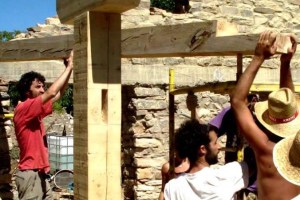
Après la présentation d’un projet de repeuplement, d’éducation et de durabilité pour le village abandonné de Fraguas, le village a été squatté et les travaux de réhabilitation et de reconstruction des bâtiments originaux du village ont commencé avec l’intention de donner un abri à ses repeupleurs et à tous ceux qui croyaient qu’une vie durable et autogérée était possible.

Anarcho-Syndicalism, Technology and Ecology | Graham Purchase (1995)

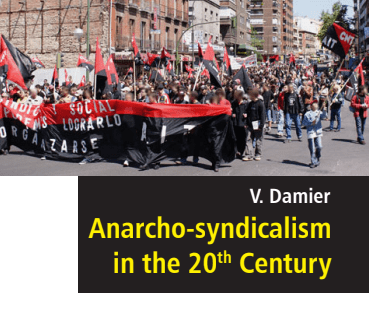
In an anarchist society, the absence of centralized state authority will permit a radically new integration of nature, labour and culture. As the social and ecological revolution progresses, national boundaries will become cartographical curiosities, and divisions based upon differences in geography, climate and species distribution will re-emerge. This essay addresses the question of what role unionism will play in these changes.