
First published online in French on Partage Noir
Gavroche n°101 – Septembre-Octobre 1998

Anarchists rarely adhere to a statist conception. From the inception of political Zionism, this national question arises among libertarians and provokes fierce debates. These controversies flare up with the course of events. At the birth of the State of Israel, anarchists took an official stance. They rejected the war in the Middle East and, apparently, the creation of a new state. However, the experience of the kibbutzim, which echoes the images of the agricultural collectives of revolutionary Spain, arouses strong sympathy.

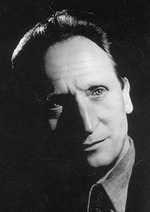
(1869-1907)
Anarchists confronted with the Dreyfus Affair, and its direct consequence, the birth of political Zionism, take a stand. Bernard Lazare theorizes libertarian Zionism, whose positions differ from those of Theodore Herzl. He does not mention the idea of a Jewish state, but rather a Jewish nation. Following his lead, other libertarian activists such as Henri Dorr [1] or Mécislas Golberg [2] become Zionists [3]. Their declarations generate strong reactions among other activists. However, for the founding fathers of anarchism — with the exception of Proudhon — the nation is recognized as an intrinsic entity to all human groups. It is its state form that is condemned. This nuance disappears among their followers, for the vast majority of French activists, who reason within the framework of an already constituted nation-state and overlook the specific dimensions of the national question. Some denounce a new nationalism: the Jewish specificity denies the aspiration to anarchist universality [4], while others are not hostile to the idea of a Jewish nation but believe that leaving for Palestine is not the best solution. They deem the climate hostile [5] and think that the social revolution would be deprived by the departure of many active Jewish revolutionaries. [6]
The emerging debate fades with the end of the Dreyfus Affair. The libertarian movement as a whole maintains a conventional discourse and denies those proposing a renewal of anarchist thought the right to speak in its name. Although the issue of Zionism resurfaces periodically, it is treated marginally, and anarchists pay little attention to it. After World War I, libertarians pay closer attention to international events due to the influx of anarchist militants expelled from many countries. It is only in the 1930s that the anarchist movement revisits Zionism. The Anarchist Encyclopedia, edited by Sébastien Faure [7], which appeared between 1930 and 1934, includes four entries related to Zionism (Israelites, Ghetto, Judaism, and Zionism). These articles develop a consistent theme: Zionism is a generous movement, allowing escape from persecution and enabling an egalitarian societal development through agricultural colonization and collective farms, but at the same time, it adds national barriers, hindering a possible revolution. The libertarian discourse does not evolve: Zionism is a noble idea, but the revolution remains the foremost imperative. Libertarians envision the world only through a revolutionary process.
The Conflicts of 1936-1939 in Palestine Change the Libertarian Discourse
Jules Chazoff [8], through two articles published in Le Libertaire, violently attacks Zionism, denouncing the Zionists’ control over Palestine and the exploitation of the Arabs. For him, supporting the oppressed is only one facet of the revolutionary struggle, and Zionism represents, in his view, a distortion of the very idea of revolution. The publication of the first of these articles provokes a response from the Jewish Anarchist Group of Paris [9]. Its militants, like Bernard Lazare half a century earlier, assert that Zionism is an emancipatory step, a prelude to future revolutions. These are the final debates before the war.

Source Dictionnaire des militants anarchistes
The Birth of the State of Israel
In the immediate post-war period, three main publications represent the libertarian press: Le Libertaire, representing all anarchists; Le Combat Syndicaliste, of anarcho-syndicalist orientation; and Ce qu’il faut dire, with a pacifist tone [10]. The birth of the State of Israel sparks numerous articles. Libertarians seek to address questions related to the war, international stakes, the birth of a state, and, consequently, the possibility of an anarchist presence in the Middle East.
An article presented as a report from Israel offers a panoramic view of the situation. The author only briefly mentions the libertarian presence: « The anarchists, for their part, distribute various Yiddish newspapers in Tel Aviv. Freie Arbeiter Stimme [11] (The Voice of the Free Worker) and Der Freie Gedank (The Free Thought) and also an anarchist periodical in Russian, published by émigrés » [12]. However, there are numerous Jewish anarchist groups that should have been a valuable source of information [13]. For example, the Jewish anarchist group in Paris, La Pensée libre, heir to the same group that before the war was called L’Autodidacte, of which Samuel Schwartzbard [14] was a member, published a bulletin with the same name from 1949 to 1963. This group of about twenty militants included Jacques and Rosa Doubinsky, David and Golda Stettner, and Nikola and Léa Tchorbadieff-Kamener. Like other militants, they distrusted the new state, but this distrust was much less pronounced and was offset by a strong sympathy for the kibbutzim. This relative distrust toward the new state gradually disappeared as the Jewish group’s militants came to view the State of Israel as a potential refuge in the face of future persecutions [15]. Some militants moved to Israel, where they helped found a newspaper, Problemen [16], led by Alexandre Thorn and Yosef Loden, with David Stettner as one of its main correspondents. However, this group remained on the fringes of official anarchism, as evidenced by the lack of recognition of their stance in the libertarian press.

War and the birth of a state are, by definition, elements that jar anarchists. But faced with this new reality, militants are forced to take a position. After employing traditional elements such as pacifism and atheism, which represent two of the foundations of anarchist thought, an analysis of current events is added to the libertarian discourse. Thus, geographical factors and anti-religious sentiment are reintegrated to justify a pacifist stance: « Blood is spilling in Palestine over a narrow strip of land scorched by the sun, a land whose prestige rests only on the illusory testimony of that mystical fraud that made it the Promised Land […] Yet Brazil is an exceptionally fertile country » [17]. This old discourse combines with the rejection of war, to which a new theme is added: the danger of international rivalries and imperialist competition. As the Cold War begins, anarchists attempt to implement the theory of the third front, designed to reject the dictates and hegemonic ambitions of both the Soviet Union and the United States: « The great war will not happen. But we hope that in a pacified Middle East, thanks to a balance of forces and favorable imperialist conditions, the social forces diverted from their essential goals towards racial and national objectives will awaken […] For, between the ‘Shalom’ of the Jewish communalists and the ‘Salam’ of the Arab farmers, the differences only exist in London, Washington, or Moscow » [18]. The militant who signs this article and theorizes this third-front practice has one of the most original careers in anarchism. His most well-known pseudonym is Louis Mercier [19]. He fought in Spain with the Durruti Column in July 1936, deserted at the start of World War II, joined the Free French Forces in 1942, and worked for the information service of Radio Levant in Beirut. After the war, he participated in the creation of Force Ouvrière and the Congress for Cultural Freedom. He is one of the best-informed militants on the situation in the Middle East. While Mercier promotes the third-front theory, his main attacks are aimed at Moscow’s ambitions: « For years, the communists waged a campaign against the Jewish ‘fascists’ [20], followers of Jabotinsky, but today they give great attention to the actions of the Irgun Zvai Leumi against Britain. Any struggle against London is presented by Moscow as a progressive struggle [21]. » He warns militants against making hasty judgments: « We know genuine Jewish revolutionary militants who are active in terrorist groups because they are primarily defending their right to exist […] If the best Arabs and the best Jews are retreating to nationalist positions and activities, it is because there is no international revolutionary workers’ movement capable of offering the oppressed hope, faith, or a way out [22]. » His article has a threefold purpose: to inform libertarians of events, to highlight the complexity of the situation, and at the same time to seek coherence with a libertarian analysis.

His viewpoint is not shared by all libertarian militants. Many of them see the conflict as the birth of a state, a source of war: « In Palestine, the State offers indisputable proof that it provokes war by its very presence [23]. » They refuse to choose sides in a war that essentially pits two nationalisms against each other: « Only the rejection of all nationalism and the free and fraternal understanding of the working populations can save Palestine from the barbarism that is spreading [24]. » However, by the end of the war, Mercier’s discourse becomes normative again. The new state has the classic characteristics of any state, with a bourgeoisie and a rapidly developing capitalist system. Mercier still places his hopes in the kibbutzim, which could be a « significant counterbalance to capitalist ambitions or the encroachment of the State [25]. While war and the new state generate protests, distrust, and critical views, the kibbutzim fascinate the anarchists. »
The Kibbutzim, an Ideal Society
Collective work experiences have always been, for them, a place to experiment with the future society. The kibbutzim then became a land of imagination, a new dream. Numerous articles report on stays, settlements, and the libertarian nature—real or imagined—of the agricultural collectives. Thus, there are many testimonies in both the French libertarian press and the international anarchist press. Le Libertaire echoed this sentiment. George Woodcock [26] expressed his strong sympathy for the « Palestinian collectives » that implemented « anarchist theory: decentralization and the elimination of individual profit. » A few months later, Jean Maline analyzed the various forms of collective work and the progress made, describing them as practical illustrations of anarchist theories: « From each according to his means. To each according to his needs » [27]. Some militants from diverse backgrounds, many of them Jewish but also some Spanish, settled in Israel and worked in the kibbutzim. These kibbutzim became a privileged source of information for libertarians. Elie Barnavi recounts the journey of a certain Ramon, a Spanish anarchist militant. He arrived in Palestine in 1948, participated in the War of Independence in a brigade composed of immigrants from various nationalities, including some libertarians. These militants dispersed and settled in different kibbutzim [28]. At the same time, other militants arrived in Israel, often for family reasons.

Janurary 1961 IWA journal
This was the case of Joseph Ribas, a militant of the National Confederation of Labor, who had participated in the Spanish Civil War, where he was seriously injured. After spending more than ten years in France, he left with his wife and two children for Jerusalem and then settled in Kibbutz Hahotrim, south of Haifa, where, according to his testimony, he found the same way of life as during the Spanish Revolution [29]. Based on these libertarians’ testimonies, renowned militants Gaston Leval [30] and Augustin Souchy provided the Spanish libertarian press in exile with numerous reports on the living conditions in the kibbutzim. Augustin Souchy visited Israel in 1952 and published a book, The New Israel: A Journey Through the Kibbutzim [31], in which he compared the kibbutzim to the Spanish collectivizations. Individualist anarchists, advocates of sexual revolution, published a report on « Family, Child, and Sexual Relations in the Kibbutzim » [32]. This movement was amplified by other travel stories. Le Combat Syndicaliste published a six-month report on this nascent society [33]. In his travel account, the author painted a sympathetic picture, focusing on the achievements and social advances made by the Histadrut.
The kibbutzim, and more generally forms of collective work, were emphasized and idealized to the point of being seen as fully libertarian societies. Beyond the anarchists’ distrust of a state, it is clear that they de facto recognized the birth of the State of Israel, even if later their criticism of the Israeli state became more acute. Several factors explain this recognition, with the kibbutzim being the key element. The birth of a state and the affirmation of Jewish nationalism—despite the professed anti-state and anti-nationalist rhetoric—ultimately did not prevent the recognition of Israel and its legitimacy. Indeed, the goal was to transcend the national and state framework, arising from a quasi-theological and millennial vision of societal evolution. However, this reconstruction of society, according to an idealistic vision that neglects realities in favor of building ideal types, with the kibbutzim as the cornerstone, allowed anarchists to avoid truly confronting the question of state formation and the population’s adherence to this form of society. They deliberately avoided questioning traditional anarchist foundations. It is also notable that, unlike other far-left groups, the anarchists did not align their discourse with that of the Communist Party, nor did they create a revolutionary anti-imperialist mythology.
[1] Henri Dorr, real name Lucien Weil (1865–around 1914?), anarchist militant and correspondent for Le Libertaire, signed two articles: « The Right to be Jewish » in Le Journal du Peuple n°6, September 24, 1899, and « Ohé les Juifs » n°11, October 31, 1899.
[2] Cf. Catherine Coquio, “A Political Shift During the Dreyfus Affair, Mécislas Goldberg in 1898-1899” in Archives Juives n°1, first semester 1994, Paris, Liana Lévi, pp. 45-57.
[3] For a more in-depth analysis, see Philippe Oriol « Bernard Lazare Anarchist, » Sylvain Boulouque « 1899: Debates on Zionism in the Anarchist Press » in Mélanges Bernard Lazare, Honoré Champion, 1998 (forthcoming).
[4] Ludovic Malquin, « Regarding the Right to Be Jewish, » Le Journal du Peuple n°7, October 1, 1899.
[5] Cf. Anarchists in Exile: Unpublished Correspondence from Pierre Kropotkin to Marie Goldsmith, 1897-1917, letters presented and annotated by Michael Confino, Paris, Institut d’études slaves, collection « Cultures et sociétés de l’est, » vol. 22. Letter dated June 30, 1907, p. 296.
[6] Socialist Revolutionary Internationalist Students, « Antisemitism and Zionism, » Literary Supplement to Les Temps Nouveaux, Editions de l’Humanité nouvelle, Paris, 1900, pp. 274-279.
[7] Sébastien Faure (1858–1942) was the founder of Le Libertaire, succeeded by Le Journal du Peuple, which was created to engage anarchists in the Dreyfusard fight. Faure led the libertarian movement through various conferences and publications.
[8] Jules Chazoff, real name Chazanoff (1891–1946), libertarian militant and editor for Le Libertaire since the early 1920s. He took an interest in Zionism, writing the entries for the Anarchist Encyclopedia. Chazoff wrote two articles: « When Israel Reigns » n°615, August 18, 1938, and « The Jews and Palestine » n°617, September 1, 1938.
[9] The response that arrived the following week was published fifteen days later, « A Group of Jewish Anarchists, » « The Jewish Question and Palestine, » n°618, September 8, 1938.
Certainly! Here’s the completion of the translation into English of the remaining references:
[10] There are other bulletins, but they do not generally address Zionism, except in rare instances. La Révolution Prolétarienne was not included, as it entrusted most of its articles to Robert Louzon (1882–1976), who was not an anarchist and had taken antisemitic positions early in his activism. Cf. Michel Drouin, “An Exemplary Thesis at the Peak of the Dreyfus Affair: The First Scientific Study of the Jewish Proletariat,” pp. 45-53 in Cahiers Jean Jaurès n°138, October-December 1995.
[11] The American Jewish Libertarian Group, whose weekly publication ceased in 1981.
[12] Moishé Chaym, “Departure to Israel,” Le Libertaire n°237, August 11, 1950. Unless otherwise noted, all articles cited come from Le Libertaire.
[13] For pre-World War I, cf. Nathan Weinstock “The Jewish Anarchist Movement,” in Point Critique n°35, Brussels, July 1988, pp. 20-37.
[14] Samuel Schwartzbard (1888–1938) assassinated Hetman Petlioura in May 1926, responsible for pogroms during the Ukrainian Civil War. He was acquitted. “The Pogrom Trial” led to the foundation of the International League Against Antisemitism.
[15] Testimony of Claude Doubinsky [June 1996], who attended the meetings of the Jewish anarchist group in Paris. The Yiddishist libertarians, who were previously aligned with the Bund, shifted their positions to a more sympathetic, though still critical, view of the State of Israel.
[16] Problemen ceased publication in 1993.
[17] Samuel Vergine, “Massacres in the Promised Land,” Ce qu’il faut dire, n°56/57, May 20, 1948. S. Vergine, whose real name was Louis Dorlet (1905–1989), was the leader of pacifist-oriented journals.
[18] Damashki, “Could Peace Be Near in Palestine,” n°128, May 6, 1948.
[19] Louis Mercier-Vega, real name Charles Corvint (1914–1977), used the pseudonyms Ridel and Couramy in the pre-war period and Damashki, Parane in the post-war period when writing for the libertarian press.
[20] It is possible that Mercier had already met Arthur Koestler, who had been associated with the « Revisionist Zionists, » and that the term fascist was used to describe the Communist strategy rather than to attack the followers of Jabotinsky.
[21] S. Parane, “For an Internationalist Action: The Palestinian Melting Pot,” n°83, June 26, 1947.
[22] Ibid. Mercier used the same argument in later articles: “The Imperialist Game and Social Realities in the Middle East,” n°177, April 15, 1949. Though at times he resorted to a stereotypical analysis, as in “Palestine 1948,” n°111, January 8, 1948.
[23] Eric-Albert, “Palestine: Strategic Land,” n°133, June 11, 1948. The same terminology was used in the preceding and following weeks: “Unofficial War in Palestine,” n°130, May 21, 1948; “Sterile Struggles,” n°136, July 2, 1948.
[24] Gaston, “Jews and Arabs Sacrificed by the Great Powers,” n°131, May 28, 1948. Gaston, whose real name was Armand Schuer, was an Austrian anarchist militant, close to council communism.
[25] “The Reason of State in Israel,” n°211, May 13, 1950.
[26] George Woodcock (1912–1995) was an English anarchist militant. He was the editor of the journal Now and the author of Kropotkin: The Anarchist Prince (Paris, Calmann-Lévy, « Traduit de » collection, 1953). He was a friend of George Orwell and Manès Sperber. The Palestinian Collectives, n°123, April 1, 1948.
[27] J. Maline, “The Free Communes in Israel: Their Character – Their Life,” n°203 and 204, November 18 and 25, 1949.
[28] Cf. Elie Barnavi, “The Troubles of Ramon or the Ambiguities of Israeli Nationality,” pp. 14-17 in M, Monthly Journal of Marxism and Movement, n°61-62, May-June, devoted to Israel, and testimony of the person concerned, Tel Aviv, August 1996.
[29] Testimony of Joseph Ribas (Hahotrim, August 1996). He became the correspondent for the anarcho-syndicalist movement. Thus, in A.I.T. (Monthly Journal of the International Workers’ Association), n°37, January 1961, he contributed a chronicle on the celebrations of the 40th anniversary of the Histadrut. He reported on living conditions in the kibbutzim in the Fédération Anarchiste’s internal bulletin (n°55, March 1965), and published a pamphlet on the kibbutzim in 1972 (Ruta, second edition, third year, March 1972).
[30] Gaston Leval, real name Pierre Pillier (1895–1978). His commitment to the Spanish anarchists dated back to World War I, during which he was a draft dodger. He played an important role in Spanish libertarian organizations and participated in the collectivization of land during the Spanish Civil War. He returned to France in 1938 and after the war founded various journals. He was one of the main correspondents for the Spanish libertarian press.
[31] Augustin Souchy (1898–1984), a German anarchist militant, fled to Spain in 1933, then to Latin America. His book was published in Mexico in 1953 (in Spanish, also published in German under the same title in 1984). He also visited Israel in 1962 and 1979.
[32] L’Unique n°51, September 1, 1950.
[33] Le Combat Syndicaliste, “Impressions of Israel,” appeared from n°56, February 23, 1951, to n°63, June 1, 1951. The author of this article is presented as a « revolutionary Parisian typographer, » unionized since 1907. Unfortunately, it was not possible to find the name of this witness.
Catégories :AIT, Débat, Espagne 1936, Géopolitique, Guerre, Histoire, nationalisme, Texte



 liberté ouvrière