Catégorie : Espagne 1936

Mujeres Libres: Individuality and Community | Martha Ackelsberg (USA, 1984)

Mujeres Libres had little time to turn its vision into reality, so we cannot know how much they might have accomplished. Nor, so far as I can tell, did they have a clear formula for how to make it all work. But their own organization was a federation of autonomous local groups; and the relationship they wanted (but could not have) with the larger anarchist movement was also that of an autonomous set of units operating within the larger, federated, whole. Perhaps that model (and a sense of anarchist commitments to direct action and spontaneous organization) can provide us with some clues.
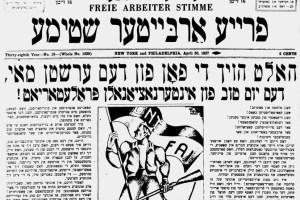
The Anarchists, Zionism, and the Birth of the State of Israel | Sylvain Boulouque (1998)

Anarchists rarely adhere to a statist conception. From the inception of political Zionism, this national question arises among libertarians and provokes fierce debates. These controversies flare up with the course of events. At the birth of the State of Israel, anarchists took an official stance. They rejected the war in the Middle East and, apparently, the creation of a new state. However, the experience of the kibbutzim, which echoes the images of the agricultural collectives of revolutionary Spain, arouses strong sympathy.

Espagne : problèmes de la Révolution | Ariane Miéville & José Luis García González (2024)

Durant la Guerre d’Espagne, des anarchistes acceptèrent d’être associé.es au pouvoir en devenant ministres… Comment ce processus d’intégration s’est-il produit ? Quelles en furent les conséquences ? Cet article propose un aperçu succinct et partiel. Il vise à ouvrir la discussion sur des problèmes qui – sous des formes différentes – restent actuels.

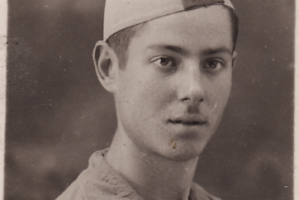
Notes on the life of Eduardo Vivancos 1920-2020 | Reddebrek, 2021

Almost a century in the Libertarian and Esperanto movements

On the 30th December 2020 Eduardo Vivancos passed away at the age of 100. He leaves behind a family and nearly a century of dedication to a number of causes from athletics, Anarchosyndicalism, and minority languages especially Catalan and Esperanto. I think his life is worth remembering and while in the Spanish world his death was followed with numerous tributes and retrospectives, including a feature in Corredor a popular magazine dedicated to running, and a lot of friends mourned him in Esperanto texts, he’s largely unknown in English.

Documentaire |  »De toda la vida » en français (Mujeres Libres d’Espagne)

De toda la vida (Lisa Berger y Carol Mazer, 1986) est un documentaire sur l’organisation Mujeres Libres qui raconte a travers d’entrevues, la participation de ses membres à la guerre civile espagnole et leurs luttes quotidiennes comme anarchistes et comme femmes dans la guerre et la révolution. Les protagonistes parlent de comment elles se sont impliquées dans la guerre, de leurs relations avec d’autres organisations anarchistes et de leur vie depuis ce temps. Des décennies plus tard, Mujeres Libres reste une modèle de féminisme révolutionnaire.

Film en ligne | « Sur la Brèche. Des anarchistes contre Franco » De Mateos Gonzalo 2018 – 70 minutes

Sur la Brèche. Des anarchistes contre Franco » De Mateos Gonzalo 2018 – 70 minutes Espagnol sous-titré en Français Un documentaire biographique sur la vie du militant anarchiste Octavio Alberola. Octavio Alberola Suriñac est né le 4 mars 1928 à Alaior (Minorque, îles Baléares). Fils des enseignants rationalistes et […]