
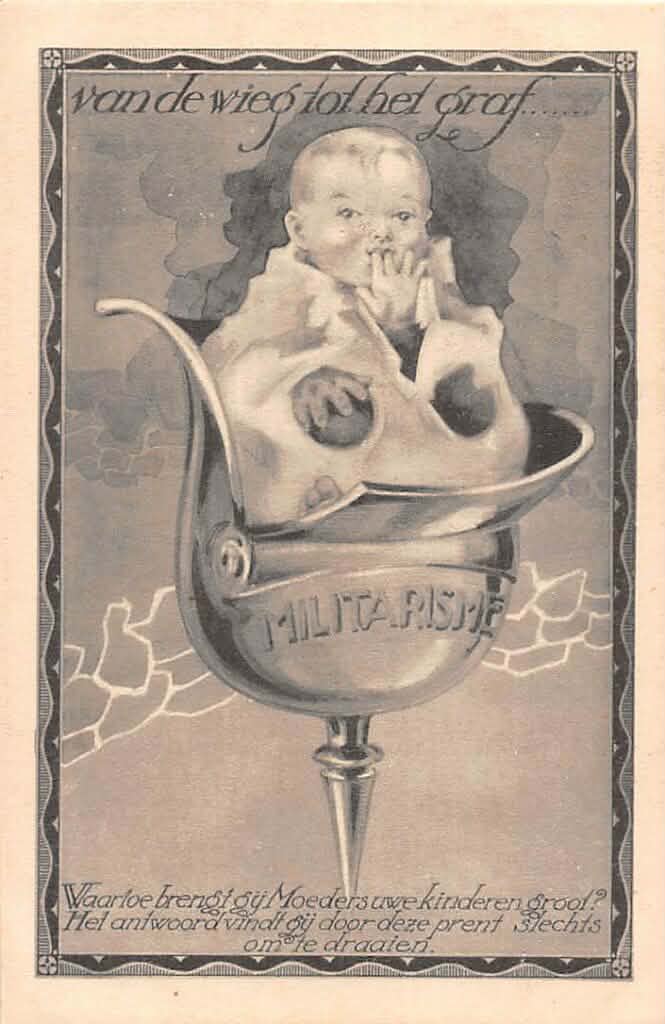
I’ve been posting different points of view on different wars and armed conflicts on my ‘social’ media. Not because I agree on everything in any one of them. But I get criticized and frankly it’s difficult to find texts that focus on what I think is most valuable and urgent in the debates that are desperately urgent while the anarchist movement tears itself apart yet again and makes the same mistakes we made more than a century ago.
The two camps that seem to be forming are either ‘join the army’ or ‘be pure and do nothing’. I don’t want to get dragged into any of those camps frankly, so after a short clarification why either are unsatisfactory for me, I’ll focus on the debate I think we should be having and the work we should be doing.
I happen to think joining the army is not the best choice: there’s more urgent and more anarchist work to be done outside of the army for example. Then again what I think about people making other choices doesn’t matter much. Nor should it. Different situations result in different tactical personal choices.
The old anarchists and antimilitarists were right that people could serve the cause irrespective of those choices. If you could refuse, refuse. If you can’t, then organise within the army. Etc.
My conclusion is that we have all failed, whether we’re ‘sell-outs’, ‘doctrainaires’ or somewhere inbetween or smth else entirely.
What we need is a set of tools that allows for a multitude of confrontational frontlines, not sectarian (Marxian) infighting.
What we need is a set of tools that will prevent more anarchists being put before the same impossible (lack of) options.
What we need is an alternative for war to resolve conflict.
What we need is an alternative for State, Church and Capital.
-PP
War or Revolution
The anarchist strategies against war and war preparation
PP
Written for Liberté Ouvrière
Belgium
December 2025
Introduction
More than a hundred years after World War 1, the anarchist movement seems to be torn apart again by the coming war(s). Allegations fly back and forth, heated arguments between ‘realists’ and ‘purists’/’sell-outs’ and ‘dogmatics’, exclusion and accusation all round. I’m not in the business of ‘solving’ those discussions that seem sterile because none of both ‘camps’ offer real solutions. One side has bombs raining on their heads and will make the choices they make (regardless of my opinion) and the other side fails to prepare so that it will never have to make the same choices or to offer alternatives that the first side can believe in.
We’ve been in the same situation before. And the anarchist movement has produced solutions and alternatives – and that is the only thing that interests me here because neither ‘side’ can convince me to join their ranks.
Bart de Ligt’s ‘Battle Plan against War and War Preparation
De Ligt was a Dutch lifelong anti-militarist who evolved from christian pastor over marxist and then syndicalist and anarchist. He’s best known for his book ‘The Conquest of Violence’.
In these times of growing armed conflict, the anarchist movement can not and should not stand aside. We have a rich tradition of resistance not just against the symptoms but especially against the causes. And we have a long tradition of proposing alternatives going back to Proudhon’s ‘War and Peace’ (which inspired Tolstoy’s anarchism and anti-militarism) and even further back.
While Bart didn’t consider himself to be a ‘pacifist’, he heavily ciritized militarism not just for national defence but for the defence of the revolution as well. He could understand spontaneous outbursts of violence by oppressed people, but he considered it a failure of the revolutionary movement to not have offered superior, more effective alternatives for that violence:
And that is precisely the situation we find ourselves in – yet again.
Bart de Ligt’s ‘Battle Plans’ weren’t made up behind a desk by a ‘pacifist’ liberal intellectual. The ‘Battle Plan’ presented before the WRI was just one version of a long search for consistent strategies against war and its causes. And Bart de Ligt was not alone in developing these ideas: Clara Wichmann, Proudhon, Pierre Ramus, Tolstoy, Domela Nieuwenhuis, Albert de Jong, Arthur Lehning and so many others contributed to it.
The ‘Battle’ Plan is useful for anyone inside or outside the anarchist movement who wants to reflect on what can be done to prevent war alongside their peers and without waiting for anyone’s approval. Today the ‘Plan’ would probably be called ‘Social Defence’ as it is now popular in academic circles. It is what the likes of Gene Sharp (his ‘198 methods’ are included here), Brian Martin (absolute reading suggestions like ‘Social defence, Social Change’; ‘Uprooting War), Véronique Dudouet, George Lakey and many others build upon.
The new edition of Bart de Ligt’s ‘Battle Plan against War and War Preparation‘[1] is a practical annex to the new enlarged edition of ‘The Conquest of Violence’ that is being prepared (and will in turn be accompanied by some other texts).
I included the ‘100 Minutes Speech’ that introduced the ‘Plan’ (both of which Bart de Ligt proposed[2] at the triennial Conference of the War Resisters’ International[3] in Welwyn, England.
There were earlier versions of practical proposals in (‘[The antimilitarists and their methods of struggle[4]‘ (1921) »[New forms of war and how to combat them][5]‘ (1927), ‘[Peace as Act][6]‘ (1933, 2 volumes, 718 pages and an shorter template for ‘The Conquest of Violence’). Some of those or extracts are included in this separate brochure. First of all the ‘100 Minutes Speech’ that is so necessary to understand the Battle Plan, but that was missing in previous editions of ‘The Conquest of Violence’.
Even Bart’s theory is intended for practical use. It’s not easy to find some spectacular quotes, one-liners, click-bait or slogans in his writing – there are more invigorating propagandists to be found. Bart was an intellectual, spiritually sensitive and born and raised in christianity then influenced by Marxian bourgeois rhetoric – both of which he rejected because of a number of fundamental flaws, but without throwing the baby out with the bathwater.
One can agree or not with how he always tried to foster the broadest possible front and keeping communication lines open. With how much of christianity and Marxianism he kept carrying around. With some of his positions and choices.
But we would be unwise in these times to discard the sources of radical antimilitarism in these times out of hand, without evaluating whether they can be of use to us and how (or not).
Anarchism and militarism
My ambition here is -first of all- to contribute to the war against war. A more nuanced picture appears than may have been the case in recent debates. For now I think all anarchists and anti-militarists can agree that anarchism excludes militarism – understood as (to quote the IAMV[7]) « the system of the coercive organisation of all means of violence, both living and non-living, established by a state in order to use it
1. to maintain its power if it thinks it is threatened
a. by another state;
b. by a revolutionary movement of its own population;
2. to enlarge its power if it sees the chance to do so. »[8]
and « Understanding as militarism the striving for and practicing of violence and humanicide organized by states and groups organised to strive for state power, we as anti-militarists recognize all those who resist it on the basis of principle and want to impair it as much as possible, individually as well as collectively.« [9]
Later, according to Albert de Jong, « The IAMV Congress of 1921 also accepted the following resolution on revolutionary violence:
« The IAMV makes no propaganda for a red army, declares itself to be against every form of militarism, i.e. a system of weapons in which participation is directly of economically enforced, but deems the participation in a revolutionary army, inasfar as the members do so individually voluntarily, not to be in violation of the IAMV principles« .
The IAMV as such now no longer had the right to propagate violence as a revolutionary means of struggle.
A new simplification of the declaration of principles in 1925 led to:
« 1. The IAMV understands as militarism every system of monopolized violence.
It fights against militarism in all its forms.
(…)
4. The IAMV wants to convince the workers of the fact that the destruction of militarism is a main condition for social liberation.
(…)
7. (…) takes (…) at the same time position against every attempt to reinstate it or to implement a new militarism in the name of socialism, communism, proletarian state, revolution or anything else. » »[10]
I think we can also all agree that less violence is better. And that large parts of the anarchist, revolutionary, syndicalist, anti-militarist, feminist, etc liberation struggle is and will always be non-violent. That’s what I focus on, but without trying to limit people. There are other times and places to address other choices and tactics.
Gandhi used his reasoning to justify militarization and nationalism, the state and capitalism. We as anarchists do not accept militarism as a ‘justified’ form of ‘violence’ as Gandhi did, but Gandhi’s quote on nonviolence or cowardess sums up Bart de Ligt’s position on (non-militarist) violence rather well.
« In 1861 Proudhon published La Guerre et la Paix (War and Peace), a book which generated considerable controversy. In the first half of the book Proudhon extolled the heroic virtues of war, only to condemn war in the second half as barbaric and antediluvian. He argued that the cause of war is poverty. Peace will be achieved through the organization of economic forces by the workers themselves. »
-Robert Graham, The General Idea of Proudhon’s Revolution
See also Bart’s introduction to Jeanne Duprat’s ‘About War and Peace in the Spirit of Proudhon’ in this book. And of course Jeanne Duprat’s work itself[11]. Also Dr. Ludwig Oppenheimer titled ‘The mental principles of Anarchism’ (in part III of Die Dioskuren. Jahrbuch für Geisteswissenschaften, München, Meyer & Jessen, 1924)[12]
Bart de Ligt’s ‘Battle Plan’ was just one single example of this long tradition. It was also aimed at a broader public than his own anarchist comrades. Much of is politics and analysis is implied, in order to allow as many people as possible to use it. I’ve tried to give more context, in order to bring back an understanding of anarchism, that was much better known at the time – everybody in the W.R.I. knew Bart and his anarchist convictions, even if the W.R.I. was (and is) by no means an anarchist organization.
This anarchist antimilitarism is in stark contrast to the nationalism and the war-enthousiasm that Marx and his gang displayed, for example in the Franco-Prussian war that was the direct lead-up to the Paris Commune. Marx & Co. were staunch enthusiasts of Prussia’s war and victory, that they perceived as a victory of their own centralism over the ‘French’ federalism of Proudhon. Both Bolsheviks and ‘social’-‘democrats’ have consistently defended militarism – at best, they decried ‘capitalist wars’ to cover up their own imperialism. After all, State and Capitalism always lead to war – and the ideological or mythical rationale makes little difference – as one could expect ‘dialectical’ and ‘historical materialists’ to know all too well. So they were subject to the exact same ‘logic’ as their ‘enemies’.
So unlike Marxians, anarchists agree that militarism is counter-revolution. That puts us before the task of creating a more effective set of means and methods to defend society against organized violence by police, army, etc – whether ‘our own’ or ‘foreign’.
And that is precisely why we need collaboration and solidarity – and diversity of tactics – to get out of this mess. Not sectarianism, not loosing sight of the errors that others make (Marxians for example) so we can consider the gravity and size of our own.
It’s why we must go back to the basics of anarchism: syndicalism, activism, mutual aid, solidarity, internationalism, etc that was summarized in Bart de Ligt’s ‘Battle Plan against War and War Preparation[13]‘, https://theanarchistlibrary.org/library/bart-de-ligt-soldiers-and-workers-strike, that was the basis for what is today mostly called ‘Social Defence’ (read Brian Martin on the subject!: ‘Uprooting War’, ‘Social Defence – Social Change’, etc on https://www.bmartin.cc/pubs/sd.html)
Footnotes
[1] https://antimilitarism.org/wp-content/uploads/BATTLE-PLAN-AGAINST-WAR-AND-WAR-PREPARATION-Sharpes-198-methods-1.odt
[2] on July 29, 1934. For this edition we used Dutch brochure ‘Mobilisation against the war’ as source.
[3] https://wri-irg.org/, https://co-guide.info/
[4] ‘De antimilitaristen en hun strijdwijzen’; Square brackets [ ] used to indicate translated titles that existed only in Dutch before this publication.
[5] ‘Nieuwe vormen van oorlog en hoe die te bestrijden’
[6] ‘Vrede als Daad’
[7] I.A.M.V. or ‘Internationale AntiMilitarlistische Vereniging in Nederland’: Internatioal Anti-Militarist Association in the Netherlands. I use the Dutch acronym for consistency.
[8] IAMV Congress Declaration of Principles at the 1919 Congress in Haarlem, as quoted by Bart de Ligt’s article ‘De toekomst van iamb. en iak.’ [The future of IAMB and IAK] in ‘De Wapens Neder’, May 1937 p 2. Also published in ‘Bevrijding’, May 1937
[9] Verslag van het anti-militaristisch congres 1921, Uitgegeven door het IAMB, Secretariaat Jos Giesen, p 61
[10] Source: Albert de Jong, ‘Revolutionary anti-militarism in the Netherlands’ N.V. Nijgh & Van Ditmar, ‘s Gravenhage, 1954
[11] Originally in French as »La Conception proudhonienne des Facteurs économiques de la Guerre et de la Paix’, 1928. See also her work ‘Proudhon, sociologue et moraliste’
[12] https://archive.org/details/diedioskurenjahr3192unse
[13] https://antimilitarism.org/links-further-reading/bart-de-ligt-mobilisation-against-the-war-100-minutes-speech-battle-plan/
Catégories :Conflit armé, Guerre, Histoire, Journal Liberté Ouvrière


 liberté ouvrière
hello,
Is there a translation in french or tous interesting text programmed?